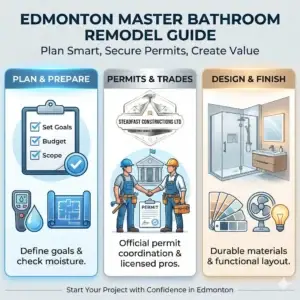
A home basement renovation can add living space and value. Done right, it makes the house more useful. Done wrong, it creates moisture and code problems. This guide shows Edmonton homeowners how to plan a safe, practical, and value-adding home basement renovation.
You’ll learn what permits are, how to handle moisture, which layouts sell well, and how to work with contractors. I include local references and trustworthy sources so you can check facts. For help with planning and permits, consider contacting Steadfast Constructions Ltd. They handle basement design and permit coordination in Edmonton.
Why a home basement renovation can add value
A finished basement usually increases usable square footage. It can become a rental suite, a family room, or a home office. Many buyers value extra living space. Recent data shows renovation activity remains strong across Canada, and homeowners are focused on usable improvements.
In Edmonton, legal basement suites are in demand. Secondary suites can add rental income or long-term flexibility. But they require permits and code compliance. The City of Edmonton requires permits for all secondary suites and lists egress and safety rules. For this reason, planning with the rules in mind helps protect your investment. City of Edmonton
First steps: decide purpose and priorities
Start by deciding how you want to use the space. Common choices:
- Rental suite or secondary suite (legal).
- Family room or media room.
- Guest bedroom with bathroom.
- Home office or playroom.
Your purpose affects egress, ceiling height, mechanical loads, and ventilation. It also affects the permits you need. If you plan a rental suite, plan for separate access, egress windows, and code-required features. The City’s secondary suite guide explains egress and exit requirements in detail.
Write a short list of must-haves and nice-to-haves. This makes design decisions and trade-offs easier.
Permits and code: what to check early
Permits protect you and future buyers. In Edmonton, many basement changes require permits. That includes adding bedrooms, changing plumbing, or adding new heating or wiring. You can check the residential permit guide on the City of Edmonton site.
Key permit triggers:
- Creating a secondary suite.
- Adding or moving plumbing or gas lines.
- Major electrical or structural changes.
Ask a contractor who will pull permits and who will attend inspections. A contractor who handles permits reduces the risk of missed steps.
Moisture and drainage: fix the cause before you finish
Never finish a basement until moisture issues are fixed. The Canada Mortgage and Housing Corporation warns that finishing over a moisture problem traps water and mould under new finishes. Address exterior grading, gutters, and any interior leaks first. Canada Mortgage and Housing Corporation
Steps to manage moisture:
- Inspect and repair the outside grading and downspouts.
- Check sump pump and perimeter drains.
- Use appropriate interior moisture barriers and drainage where needed.
- Replace damaged framing or insulation.
A trusted contractor will do a moisture diagnosis before finishing walls or installing insulation.
Insulation and energy: keep the basement comfortable
Insulating a basement properly improves comfort and lowers heat loss. Natural Resources Canada recommends specific wall and floor insulation approaches for Canadian homes. Proper insulation and air sealing reduce drafts and help with energy efficiency. Natural Resources Canada
Tips:
- Insulate walls rather than the interior of concrete in ways that trap moisture.
- Consider continuous insulation strategies that reduce thermal bridging.
- Use vapour-control measures matched to your insulation type.
Good insulation planning also helps with resale. Buyers notice comfortable basements that are dry and warm.
Egress, safety, and ceiling height
If bedrooms are planned, egress windows are required. The City of Edmonton provides detailed egress window and well requirements. These specify the minimum clear opening area and well clearance for windows below grade. Follow these rules closely to pass inspections.
Other safety points:
- Ensure smoke and carbon monoxide alarms are installed as code requires.
- Plan for safe stair access and emergency exits.
- Confirm ceiling height meets code for habitable spaces.
A contractor familiar with Edmonton inspections can avoid delays by incorporating these items into the initial plan.
Layouts that add value (and sell)
Certain basement layouts tend to add more value or market appeal:
Legal secondary suite with separate entrance
A true rental suite with a private entrance, full kitchen, and its own mechanical systems adds flexibility. It must meet all secondary suite code requirements for egress, fire separation, and mechanical systems. Use the City of Edmonton’s secondary suite design guide as your checklist.
Family room + bathroom + storage
A comfortable family room, a full or three-quarter bathroom, and built-in storage appeal to families. Buyers value practical living areas and storage solutions.
Bedroom and office combos
A bedroom plus a quiet home office meets many modern needs. If you plan to advertise as a rental, ensure the bedroom meets egress and legal requirements.
When planning layouts, think of flexibility. A space that can shift from office to bedroom to playroom has more market appeal.
Trades and coordination: who you need on the job
Basement projects often need several trades:
- Carpentry and framing.
- Plumbers and gas technicians.
- Electricians for wiring and lighting.
- HVAC technicians for ventilation and heating.
- Insulation and drywall crews.
A project manager who coordinates these trades reduces mistakes and rework. Local contractors with established trade relationships often schedule inspections faster and keep the project moving.
(Expert note) “Good coordination is the difference between a smooth basement finish and a job that drags on,” says Mark Patel, Project Manager at Steadfast Constructions Ltd. “We plan trades, inspections, and procurement up front to avoid surprises.”
Budgeting and phasing (without cost numbers)
You can phase work in stages. That helps manage cash flow and keeps the house usable. Typical phases include:
- Fixing exterior drainage and moisture issues.
- Rough-in plumbing, electrical, and HVAC.
- Insulation, framing, and drywall.
- Finishes: flooring, paint, trim.
- Final inspections and handover.
Ask contractors for a phased scope and clear milestones. Include warranties and post-completion support in writing.
Practical project timeline and expectations
Every job is different. Timelines depend on permits, inspections, and material availability. In Canada, renovation prices and supply pressures have been shifting, so allow time for procurement. Recent statistics show renovation price indices have changed quarterly, reflecting continued market dynamics. Planning helps reduce delays.
A contractor should give a clear timeline with milestone dates and inspection windows. Weekly updates reduce homeowner stress.
Finishes and flooring for basements
Choose finishes that stand up to basement conditions:
- Flooring: engineered products or moisture-tolerant floors are common in basements.
- Walls: Use moisture-resistant drywall where recommended.
- Ceilings: consider drop ceilings or painted drywall based on mechanical access needs.
Pick durable and low-maintenance materials. Buyers and renters prefer easy-care surfaces in lower-level spaces.
How to choose a contractor for your home’s basement renovation
A careful vetting process prevents problems. Use this checklist when interviewing contractors:
- Do they show a portfolio of local basement projects? Ask to see similar work.
- Can they provide references from Edmonton clients?
- Do they carry liability insurance and WCB coverage?
- Who pulls permits and attends inspections? Ask for written confirmation.
- Do they include moisture diagnosis and remediation in the scope? Ask for details.
- How do they handle unexpected structural or moisture issues? Ask for examples.
Get at least two written quotes and compare scopes, not just totals. A clear contract should list scope, timeline, permit responsibility, and warranties.
Real local examples and lessons
Example 1: Egress upgrade and legal suite: An Edmonton homeowner wanted a rental suite. The contractor coordinated an engineer, pulled permits, installed an egress window well to code, and completed the suite. The inspector signed off after the final inspection. Planning for egress and permits early avoided costly rework.
Example 2: Moisture fix before finishing: Another home showed signs of dampness. The contractor fixed exterior grading and perimeter drainage, installed a sump system, and completed interior drying. Finishes followed only after moisture tests showed stable conditions. Following CMHC guidance prevented future mould problems.
These examples show that solving site issues first saves money and preserves value.
Final checklist before you start a home basement renovation
- Confirm your project purpose (suite, family space, office).
- Check permit requirements with the City of Edmonton.
- Do a moisture diagnosis and fix exterior drainage issues first.
- Ensure egress, alarms, and safety measures meet code.
- Get written scopes, phased plans, and warranties from contractors.
When these items are in place, your home’s basement renovation is set up to add value and avoid common pitfalls.
Conclusion
A well-planned home basement renovation can add living space and value to your Edmonton home. Start with the purpose, check permits, diagnose moisture, and plan trades. Use local guides and trusted sources to confirm code and inspection needs.
If you want help with planning, permit coordination, or a permit-ready design, contact Steadfast Constructions Ltd for a discovery visit. They offer local portfolio examples and full-service basement development in Edmonton.
Frequently Asked Questions (FAQs)
Q1: Do I need a permit for a home basement renovation in Edmonton?
A1: Many basement changes require permits, especially for secondary suites, plumbing, electrical, or structural work. Check the City of Edmonton’s permit guide or ask your contractor.
Q2: How do I know if my basement has moisture problems before renovating?
A2: Look for damp spots, mould, efflorescence on concrete, or a musty smell. A professional moisture diagnosis and exterior drainage check are the right first step. CMHC guidance warns not to finish a basement until moisture issues are fixed.
Q3: What egress requirements apply to basement bedrooms in Edmonton?
A3: Basement bedrooms need egress windows that meet minimum clear opening and well clearance rules. The City’s secondary suite and egress guides detail dimensions and installation rules.
Q4: Can I convert my basement into a legal suite?
A4: Yes, many basements can become legal suites if they meet zoning, egress, fire separation, and mechanical requirements. Permits are required for all secondary suites in Edmonton.
Q5: Who should I hire to manage a basement renovation project?
A5: Hire a contractor with local basement experience, trade coordination skills, and permit handling. Ask for a local portfolio and written warranties. Companies like Steadfast Constructions Ltd offer full-service basement development and permit help.
Sources & further reading
- City of Edmonton: Home renovations and basement development.
- City of Edmonton: Secondary Suite Design Guide (egress and suite rules).
- City of Edmonton: Egress from Bedrooms guide.
- Canada Mortgage and Housing Corporation: Guidance on Basement Moisture and Finishing.
- Natural Resources Canada: Basement insulation and energy guidance.
- Statistics Canada: Residential renovation price indexes and market context.
- Steadfast Constructions Ltd: Local basement renovation and permit services in Edmonton.