Planning a basement project sounds simple at first. But once you start, permits and rules can get confusing. Many homeowners in Edmonton face this.
That’s where basement development contractors help. They don’t just build your space. They guide you through permits, inspections, and city rules.
In Edmonton, most basement renovations need approval from the city. Skipping permits can lead to fines, delays, or problems when selling your home.
This guide explains how permits work, what the city of Edmonton basement development permit process looks like, and how contractors make things easier for you.
Basement Development Contractors and Permits in Edmonton: What You Need to Know
If you’re planning basement developments in Edmonton, permits are not optional in most cases.
The City of Edmonton requires permits to ensure safety, zoning compliance, and proper construction.
According to the official city guidelines, many projects need both:
- Development permit
- Building permit
And sometimes additional permits like:
- Electrical
- Plumbing
- HVAC
These permits ensure your basement meets Alberta safety codes and building standards.
And this is where experienced basement development contractors become important. They understand what applies to your project and handle the paperwork properly.
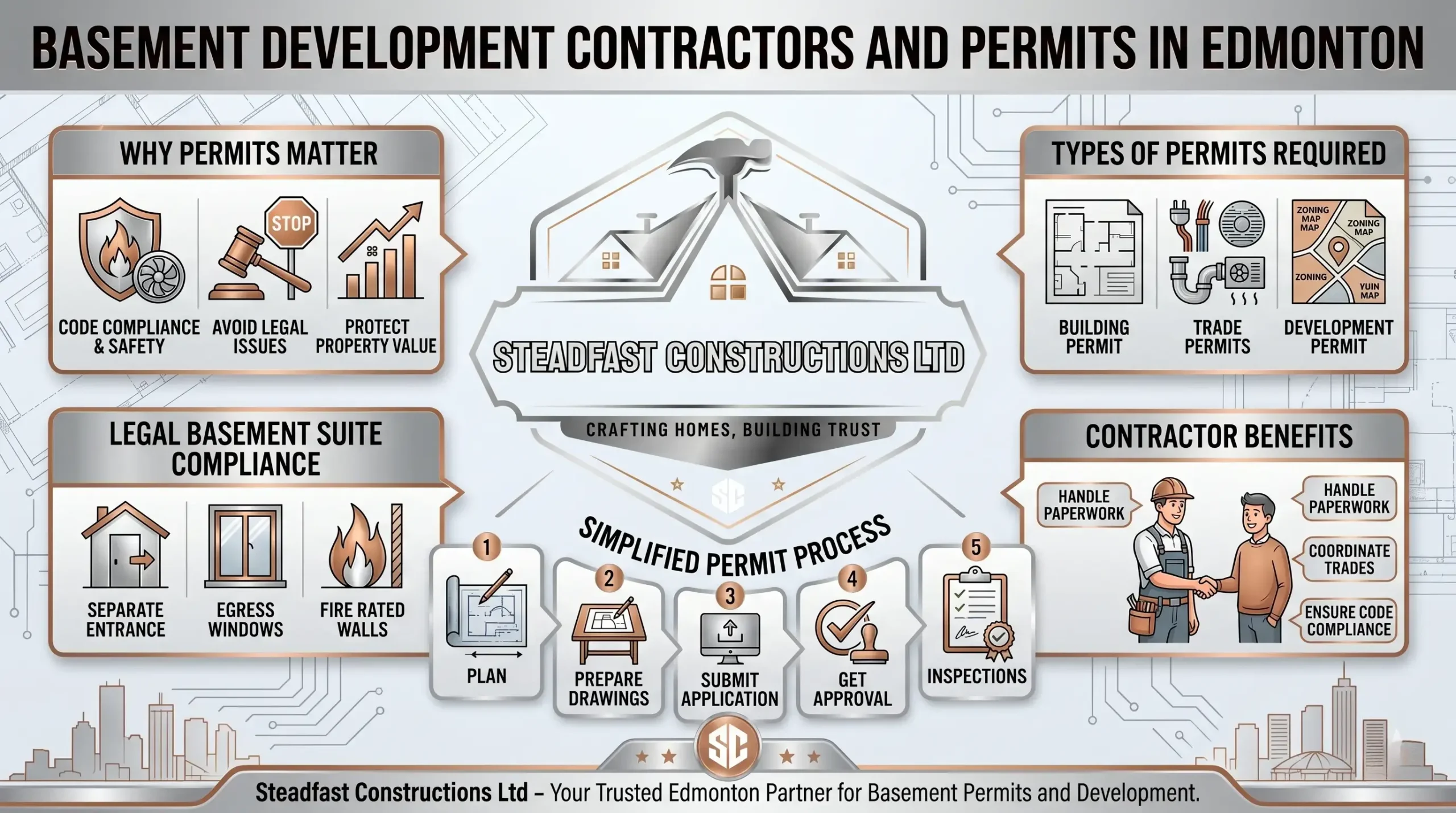
Why Basement Development Permits Matter in Edmonton
Permits are not just paperwork. They protect your home and your investment.
Safety and Code Compliance
Permits ensure your basement meets safety rules. This includes:
- Fire protection
- Ventilation
- Structural safety
For example, basement bedrooms must have proper egress windows for emergency exits.
Avoid Legal Issues
If you build without permits:
- The city can stop your project
- You may face fines
- You may need to redo the work
Starting work without permits can lead to penalties and stop-work orders.
Protect Property Value
Unpermitted work can create problems when selling your home. Buyers and inspectors often check permit history.
Types of Permits Required for Basement Developments in Edmonton
Understanding permits helps you plan better. Most basement development companies in Edmonton deal with these regularly.
Building Permit
This is required when:
- You add walls or rooms
- You change the layout
- You modify the structure
It ensures the work meets building codes.
Development Permit
This applies when:
- You change how the space is used
- You add a secondary suite
- You make exterior changes
It ensures your project follows zoning rules.
Trade Permits
You may also need:
- Electrical permit
- Plumbing permit
- HVAC permit
Each ensures systems are safe and properly installed.
City of Edmonton Basement Development Permit Process
The process is not complicated, but it has steps. Missing one step can delay your project.
Step 1: Plan Your Basement Project
Decide how you will use the space:
- Family room
- Rental suite
- Home office
Your purpose affects permit requirements.
Step 2: Prepare Drawings
The city needs:
- Floor plans
- Layout details
- Mechanical system details
For secondary suites, detailed plans are required for approval.
Step 3: Submit Permit Application
You apply through the City of Edmonton system. Your application is reviewed for:
- Zoning compliance
- Safety standards
Step 4: Get Approval
Do not start work before approval. The city clearly states that construction must wait until permits are issued.
Step 5: Inspections
During construction, inspectors check:
- Framing
- Electrical
- Plumbing
- Final build
These inspections ensure everything matches approved plans.
How Basement Development Contractors Simplify the Permit Process
This is where hiring professionals makes a real difference.
Experienced basement development contractors handle the entire process.
They Prepare Permit-Ready Designs
Contractors create drawings that meet city standards. This reduces delays and rejections.
They Apply for Permits
Many contractors submit permits on your behalf. This saves time and avoids mistakes.
They Coordinate Trades
Licensed trades are often required for:
- Electrical
- Plumbing
- HVAC
Contractors manage these trades and ensure compliance.
They Handle Inspections
They schedule inspections and fix issues if needed.
The City of Edmonton even recommends hiring experienced contractors to avoid delays and ensure proper applications.
Real Example: Basement Development in Edmonton
A homeowner in Windermere wanted to build a legal basement suite.
At first, they planned to manage everything themselves. But they ran into problems:
- Missing permit requirements
- Incorrect layout drawings
- Delayed approvals
After hiring a contractor, things changed:
- Proper drawings were submitted
- All permits were approved
- Inspections passed smoothly
The project finished without legal issues.
This is common. Many homeowners start alone but switch to professionals later.
Common Mistakes Homeowners Make
Even small mistakes can cause delays.
Starting Without Permits
Some homeowners think permits are optional. They are not.
Incomplete Drawings
Missing details can delay approval.
Ignoring Building Codes
Factors such as ceiling height and fire safety are important considerations.
For example:
- Minimum ceiling height is required
- Fire separation rules must be followed
Hiring Unqualified Contractors
Not all contractors handle permits properly. This can lead to rejected applications.
Basement Development Contractors and Local Edmonton Areas
Permit requirements apply across Edmonton. But local experience still matters.
Contractors familiar with areas like:
- Windermere
- Summerside
- Terwillegar
- Mill Woods
- The Meadows
- Downtown Edmonton
- Glenora
- Strathcona
understand local housing styles and common permit challenges.
For example:
- Older homes in Strathcona may need structural upgrades
- Newer homes in Windermere may already meet some code requirements
This local knowledge helps avoid delays.
Key Code Requirements
Before starting, it helps to understand basic code rules.
Egress Windows
Required for bedrooms. They must allow a safe exit during emergencies.
Ceiling Height
Basements must meet minimum height standards for living spaces.
Fire Safety
Includes:
- Smoke alarms
- Fire separation between units
Ventilation
Proper airflow is required for comfort and safety.
Structural Safety
Load-bearing walls and beams must meet code requirements.
These rules are not optional. They are checked during inspections.
Why Homeowners Choose Basement Development Companies in Edmonton
Many homeowners prefer working with full-service basement development companies in Edmonton.
Here’s why:
- They manage the full project
- They handle permits and inspections
- They coordinate all trades
- They reduce stress
Companies like Steadfast Constructions Ltd follow a structured process:
- Planning
- Design
- Permit approval
- Construction
- Final inspection
This approach helps avoid mistakes and delays.
When You Might Not Need a Permit
Some small updates may not require permits.
Examples include:
- Painting
- Flooring replacement
- Minor cosmetic changes
But once you:
- Add rooms
- Change structure
- Install plumbing or wiring
Permits are required.
If you’re unsure, it’s best to check with professionals.
Expert Insight from Edmonton Contractors
A local contractor shared this:
“Most delays happen because homeowners underestimate permit requirements. Proper planning saves weeks.”
This is true for many projects. Planning early helps avoid problems later.
Legal Basement Suites in Edmonton
Creating a legal suite is not just about finishing a basement. It must meet strict rules set by the city and the Alberta Building Code.
Experienced basement development contractors for legal basement suites in Edmonton understand these rules from the start. They design spaces that meet requirements for safety, layout, and approvals.
A legal basement suite must include:
- A separate entrance
- Proper fire separation between units
- Egress windows in bedrooms
- Independent kitchen and bathroom
- Smoke and carbon monoxide alarms
These requirements are checked before approval. If anything is missing, the suite may not be approved as legal.
That’s why homeowners often choose professionals instead of trying to manage it alone.
Building Code Compliance in Edmonton
Building code compliance is one of the most important parts of any project.
Basement development contractors and building code compliance in Edmonton go hand in hand. Every part of your basement must follow the Alberta Building Code.
This includes:
- Minimum ceiling height requirements
- Fire safety systems
- Proper insulation and moisture control
- Safe structural design
For example, finished basements must meet minimum ceiling height standards and include proper fire protection systems.
Contractors make sure your basement meets these rules before construction even starts. This avoids failed inspections later.
Secondary Suite Permits Edmonton
If you plan to add a rental suite, you will need extra approvals.
Basement development contractors for secondary suite permits Edmonton help you handle both development and building permits.
Secondary suites require:
- Zoning approval
- Separate entrance
- Fire-rated walls and ceilings
- Proper ventilation and heating systems
In Edmonton, a development permit is required when you change the use of a space, such as adding a secondary suite.
Contractors manage this process by preparing drawings and submitting complete applications, which helps avoid delays.
Inspection Stages Explained
Inspections are a key part of basement development. They ensure everything is done safely.
Basement development contractors and inspection stages are usually explained in a clear sequence:
- Framing inspection
- Electrical rough-in inspection
- Plumbing rough-in inspection
- Insulation and vapor barrier inspection
- Final inspection
The city checks work at different stages to confirm it meets approved plans and safety codes.
Contractors schedule inspections and fix any issues before moving forward.
Zoning Rules in Edmonton
Zoning rules decide what you can build on your property.
Basement development contractors and zoning rules in Edmonton are closely connected, especially for secondary suites.
Zoning affects:
- Whether you can build a basement suite
- Parking requirements
- Property use restrictions
Development permits ensure your project fits within the neighborhood zoning bylaw.
Contractors check zoning early so you don’t waste time on plans that won’t be approved.
Alberta Building Code Requirements
The Alberta Building Code sets the standard for safety and construction.
Basement development contractors and Alberta Building Code requirements cover many details, including:
- Ceiling height
- Stair design
- Fire separations
- Ventilation systems
- Window sizes and exits
For example, proper fire separation and ventilation are required for safety and livability.
Contractors ensure your basement meets all these rules before inspections.
Basement Development Contractors for Older Homes in Edmonton
Older homes in areas like Glenora or Strathcona often need extra work.
Basement development contractors for older homes in Edmonton understand these challenges.
Common issues include:
- Low ceiling height
- Outdated wiring or plumbing
- Poor insulation
- Structural limitations
Older basements may need upgrades before development can begin. Contractors assess these problems early and plan solutions that meet current codes.
Electrical Permit Guidelines
Electrical work always requires a permit in basement projects.
Basement development contractors and electrical permit guidelines ensure wiring is safe and approved.
In Edmonton, electrical permits are required for:
- New wiring
- Lighting installation
- Adding outlets or circuits
This applies to all basement developments and renovations.
Licensed electricians usually handle this work under contractor supervision.
Plumbing Permit Rules
Adding a bathroom or kitchen means plumbing work.
Basement development contractors and plumbing permit rules ensure proper installation of:
- Pipes
- Drainage systems
- Fixtures
Plumbing permits are required when you:
- Install new fixtures
- Move existing plumbing
- Add drainage or venting systems
Separate permits are required for plumbing systems in basement developments.
Contractors coordinate licensed plumbers to meet these requirements.
Basement Layout Approvals
Your layout affects both permits and functionality.
Basement development contractors and basement layout approvals focus on creating plans that meet city standards.
The city requires:
- Detailed floor plans
- Room dimensions
- Window and exit placements
Incomplete or incorrect drawings can delay approval. The City of Edmonton requires proper drawings before issuing permits.
Contractors prepare permit-ready layouts to avoid rejection.
Basement Suite Regulations Edmonton
Basement suites must meet specific regulations to be considered legal.
Basement development contractors and basement suite regulations in Edmonton include:
- Separate entrance requirements
- Fire-rated construction between units
- Proper ventilation and heating
- Safe exits and emergency access
These rules come from municipal bylaws and the Alberta Building Code.
If your suite does not meet these rules, it cannot be approved as a legal living space.
That’s why working with experienced contractors helps ensure everything is done correctly from the start.
How Steadfast Constructions Ltd Helps Homeowners
Steadfast Constructions Ltd works with homeowners across Edmonton.
They help with:
- Basement design
- Permit applications
- Code compliance
- Full construction
Their team understands local permit requirements and handles the process from start to finish.
So you don’t have to deal with confusion or delays.
Conclusion
Basement renovations are a great way to add space and value to your home. But permits are a key part of the process.
Working with experienced basement development contractors makes things easier. They handle permits, follow city regulations, and ensure your project is completed correctly.
If you’re planning basement developments in Edmonton, don’t take risks with permits.
Steadfast Constructions Ltd can guide you from planning to final inspection.
Reach out today to start your basement project the right way.
Frequently Asked Questions (FAQs)
1. Do I need a permit for basement development in Edmonton?
Yes. Most basement projects require a building permit and sometimes a development permit, especially if you change the layout or add a suite.
2. What permits are required for basement development in Edmonton?
Common permits include building, electrical, plumbing, HVAC, and sometimes a development permit, depending on the project.
3. Can I finish my basement without a permit?
Only cosmetic work may not need permits. Structural, electrical, or plumbing work usually requires approval.
4. How do basement development contractors help with permits?
They prepare drawings, apply for permits, coordinate trades, and handle inspections to ensure compliance.
5. What happens if I renovate my basement without permits in Edmonton?
You may face fines, stop-work orders, and problems when selling your home. In some cases, you may need to redo the work.