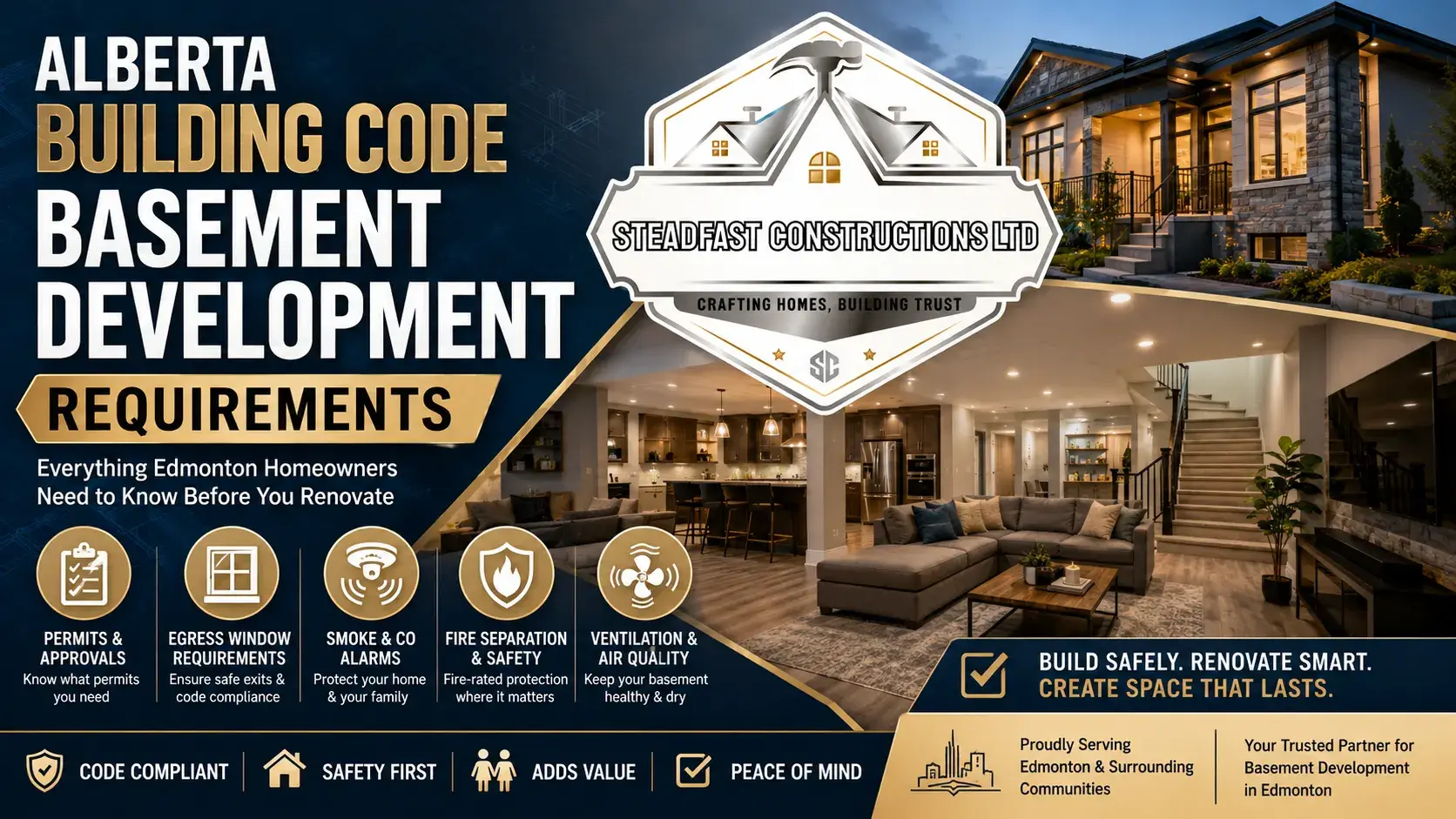
Basement renovations are one of the most popular home improvement projects in Edmonton.
Homeowners use basements for:
- Family living space
- Rental suites
- Home offices
- Entertainment areas
- Guest bedrooms
- Legal secondary suites
But basement renovations involve more than flooring and drywall.
They also need to follow Alberta building code requirements.
And honestly, many homeowners only discover code problems after renovation work has already started.
That’s why understanding Alberta building code basement development requirements early is important.
At Steadfast Constructions Ltd, we help Edmonton homeowners plan basement renovations that meet local building and safety standards while improving comfort and functionality.
This guide explains the key basement development rules homeowners should know before starting a renovation project in Edmonton.
Why Alberta Building Code Basement Development Rules Matter
Building codes are designed to improve:
- Safety
- Ventilation
- Fire protection
- Emergency exits
- Structural stability
- Indoor air quality
Basement spaces naturally have different challenges compared to upper floors.
That includes:
- Lower natural light
- Moisture risks
- Ventilation issues
- Fire safety concerns
The Alberta government and the City of Edmonton both require basement developments to meet building and fire code standards.
And these rules become even more important when homeowners plan:
- Bedrooms
- Rental suites
- Secondary suites
- Basement apartments
Alberta Building Code Basement Development Requirements for Permits
Most basement renovations in Edmonton require permits.
The City of Edmonton states that basement renovation projects may require:
- Building permits
- Electrical permits
- Plumbing permits
- HVAC permits
- Gas permits
- Development permits for secondary suites
Homeowners should never assume a basement renovation is exempt from permits.
When Permits Are Usually Required
Permits are commonly needed when:
- Adding bedrooms
- Installing plumbing
- Creating secondary suites
- Changing structural walls
- Updating electrical systems
- Installing heating systems
- Finishing unfinished basements
The City of Edmonton also encourages homeowners to work with experienced contractors during basement development projects.
Ceiling Height Rules for Basement Development
Ceiling height is one of the most common issues in older Edmonton homes.
Some older basements simply were not designed as living spaces.
The Alberta Building Code includes minimum ceiling clearance requirements for finished basement areas.
Lower ceilings can create:
- Safety concerns
- Ventilation issues
- Inspection problems
Older Edmonton Homes Often Need Adjustments
Neighbourhoods like:
- Glenora
- Highlands
- Bonnie Doon
- Westmount
- Laurier Heights
often contain older homes where the basement ceiling height becomes part of renovation planning.
Sometimes homeowners may need:
- Bulkhead redesigns
- Mechanical adjustments
- Layout changes
before the basement can qualify as a legal living space.
Egress Window Requirements in Alberta Basement Development
Egress windows are one of the most important safety requirements.
Any basement bedroom usually requires a properly sized emergency exit window.
The Alberta Building Code requires basement bedrooms to have windows large enough for emergency escape access.
Why Egress Windows Matter
Egress windows help with:
- Fire safety
- Emergency exits
- Natural light
- Ventilation
Older basement windows often fail to meet modern requirements because they are:
- Too small
- Positioned too high
- Difficult to open
That’s why many basement renovations in Edmonton now include larger window installations.
Alberta Code for Smoke Alarm in Basement Developments
Fire safety rules are a major part of basement development requirements.
The Alberta code for smoke alarms in basement developments requires smoke alarms to meet current safety standards.
Smoke Alarms Must Be Properly Installed
Modern basement developments typically require:
- Hard-wired smoke alarms
- Interconnected smoke alarms
- Bedroom smoke alarms
- Smoke alarms on each level
Interconnected alarms mean all alarms sound together when smoke is detected.
This is especially important in:
- Basement apartments
- Secondary suites
- Multi-family living situations
The Alberta Secondary Suite Standards also require smoke alarms in both the main dwelling and the secondary suite.
Carbon Monoxide Alarm Requirements
Carbon monoxide protection is also important in basement development projects.
Especially when:
- Shared heating systems exist
- Gas appliances are present
- Furnaces are nearby
The City of Edmonton recommends carbon monoxide alarms certified to Canadian standards.
Proper alarm placement matters just as much as installation.
Fire Separation Rules for Basement Developments
Fire separation is one of the biggest parts of legal basement suite approval.
Legal secondary suites usually require fire separation between:
- The main dwelling
- The basement suite
This may include:
- Fire-rated drywall
- Fire-rated doors
- Protected utility rooms
- Smoke-tight barriers
Fire separation helps slow fire spread between living spaces.
And honestly, this is one area where professional planning matters a lot because code requirements can become complicated quickly.
Ventilation Requirements for Basement Development
Basements naturally hold more moisture than upper floors.
Poor ventilation can lead to:
- Mold growth
- Condensation
- Odours
- Air quality problems
That’s why Alberta building standards include ventilation requirements for finished basements and legal suites.
Basement Bathrooms Need Proper Exhaust Systems
Bathroom ventilation is especially important in basement renovations.
Most basement bathrooms require:
- Exhaust fans
- Exterior venting
- Moisture-resistant materials
before final inspections can pass.
Electrical and Plumbing Requirements
Many older Edmonton homes need electrical upgrades before basement development can proceed safely.
That may include:
- New circuits
- Additional outlets
- Updated panels
- GFCI protection
Plumbing work also usually requires permits and inspections.
This becomes even more important for:
- Basement kitchens
- Laundry rooms
- Secondary suites
- Basement bathrooms
Alberta Basement Development Grant Information
Some homeowners search for:
- Alberta basement development grant
- Basement Development Grant, Alberta
- Alberta basement development grant eligibility
because they want to know whether financial support exists for secondary suite development.
Grant programs and incentives sometimes change depending on municipal or provincial housing initiatives.
Homeowners should always verify current eligibility requirements directly through official Alberta and Edmonton government resources before planning projects around grant availability.
The City of Edmonton continues to support housing diversification and secondary suite development across many residential neighbourhoods.
Secondary Suite Rules in Edmonton
Legal secondary suites have stricter requirements than standard basement renovations.
The City of Edmonton defines a secondary suite as a self-contained dwelling with:
- Kitchen
- Bathroom
- Bedroom
- Living space
- Separate entrance access
Additional Secondary Suite Requirements
Legal suits may require:
- Separate entrances
- Fire separation
- Additional smoke alarms
- Egress windows
- Ventilation systems
- Permit approvals
The Alberta Building Code allows only one secondary suite per principal dwelling.
Common Alberta Building Code Basement Development Mistakes
Many basement renovations run into problems because homeowners skip planning steps.
Ignoring Moisture Problems
Finishing over moisture issues almost always causes future damage.
Basement moisture should always be handled before drywall and flooring installation.
Using Bedrooms Without Proper Egress Windows
Bedrooms without compliant windows may fail inspections.
And more importantly, they create safety concerns.
DIY Electrical Work Without Permits
Electrical systems should always meet Alberta safety standards.
Unapproved work can create inspection delays and safety risks.
Poor Ventilation Planning
Basements need proper airflow.
Without it, humidity and condensation problems often appear later.
Why Local Edmonton Experience Matters
Every city has different renovation conditions.
Edmonton homes deal with:
- Long winters
- Basement moisture
- Older housing stock
- Secondary suite demand
- Permit requirements
That’s why local renovation experience matters.
At Steadfast Constructions Ltd Basement Renovation Services, we help homeowners understand basement code requirements while planning practical living spaces for:
- Windermere
- Chappelle
- Keswick
- Laurel
- Glenora
- Summerside
- Westmount
- Ellerslie
- Rutherford
- Terwillegar
and other Edmonton communities.
Why Professional Basement Planning Helps
Basement renovations involve:
- Structural planning
- Ventilation systems
- Plumbing
- Electrical work
- Fire safety
- Permit coordination
That’s why experienced contractors help simplify the process.
The City of Edmonton specifically recommends working with experienced contractors and designers for basement development projects.
A good contractor helps homeowners:
- Avoid inspection issues
- Plan layouts properly
- Meet safety standards
- Coordinate permits
- Improve long-term functionality
Modern Basement Development Trends in Edmonton
Basements today are no longer treated as unfinished storage areas.
Many homeowners now create:
- Legal rental suites
- Family entertainment rooms
- Home gyms
- Guest bedrooms
- Multi-generational living spaces
- Home offices
Current basement design trends also focus heavily on:
- Better lighting
- Open layouts
- Soundproofing
- Warm finishes
- Energy efficiency
And honestly, well-planned basements often become some of the most used spaces in the home.
How Steadfast Constructions Ltd Helps Edmonton Homeowners
At Steadfast Constructions Ltd, we help homeowners plan basement developments that follow Alberta building standards while improving everyday comfort and usability.
That includes:
- Basement development
- Legal basement suites
- Bathroom renovations
- Flooring installation
- Lighting upgrades
- Interior remodeling
- Permit-ready renovation planning
We work with homeowners throughout Edmonton and surrounding communities.
Conclusion
Understanding Alberta building code basement development requirements helps homeowners avoid delays, inspection issues, and safety problems during renovations.
The most important areas usually include:
- Permits
- Egress windows
- Smoke alarms
- Fire separation
- Ventilation
- Electrical systems
- Moisture protection
And these requirements become even more important for legal basement suites and rental spaces.
Whether you are planning a basement family room, guest space, or legal secondary suite in Edmonton, proper planning makes the renovation process much smoother.
At Steadfast Constructions Ltd, we help Edmonton homeowners create basement renovations designed for safety, comfort, and long-term functionality.
Frequently Asked Questions (FAQs)
Do I need permits for basement development in Edmonton?
Yes. Most basement renovation projects require permits, especially when electrical, plumbing, structural, or secondary suite work is involved.
What are the Alberta code requirements for smoke alarms in basement developments?
Smoke alarms usually need to be hard-wired, interconnected, and installed in bedrooms and living spaces according to Alberta code requirements.
Do basement bedrooms require egress windows in Alberta?
Yes. Basement bedrooms generally require properly sized egress windows for emergency escape and safety compliance.
What is required for a legal basement suite in Edmonton?
Legal basement suites typically require permits, separate entrance access, egress windows, smoke alarms, fire separation, ventilation, and proper inspections.
Why is ventilation important in basement development?
Proper ventilation helps reduce moisture, improve air quality, and prevent mold and condensation problems in finished basements.