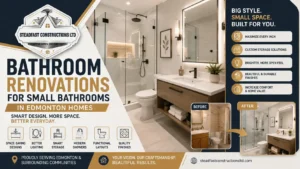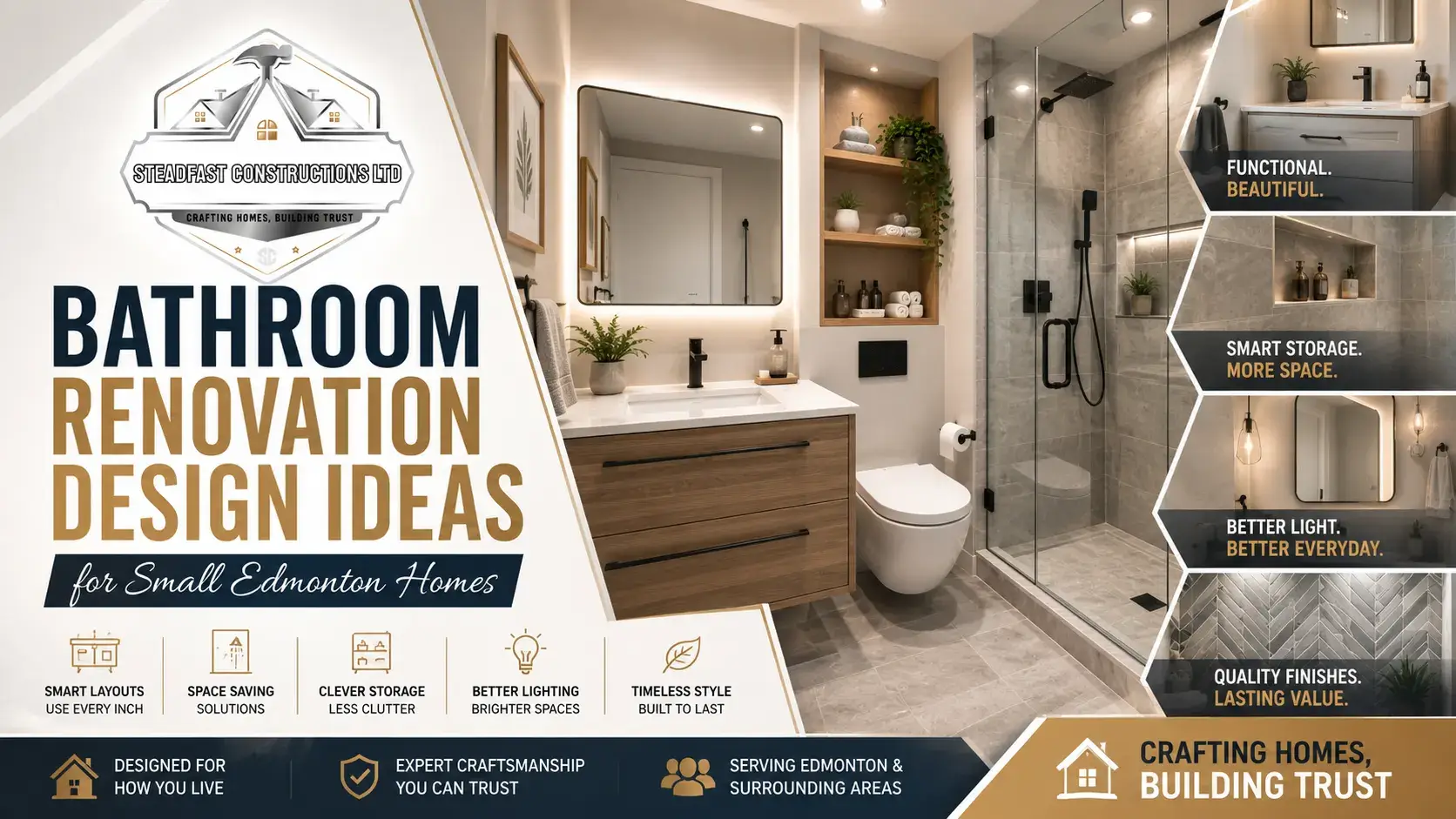
Small bathrooms are common in Edmonton homes.
That is especially true in older areas like Glenora, Westmount, Bonnie Doon, Highlands, Laurier Heights, Belgravia, and Crestwood. Many of these homes were built when bathrooms were smaller, and layouts were more closed off. Today, homeowners want more storage, better lighting, and a room that feels easier to use every day.
That is where smart bathroom renovation design matters.
A good design does not just make the room look better. It makes the space work better. In a small bathroom, every choice matters. The vanity, shower, lighting, mirror, tile, and even the door swing can change how the room feels.
If you are planning a bathroom update, the best bathroom renovation designs start with function first. That is also how a strong bathroom renovation and design plan avoids wasted space and unnecessary mistakes. Houzz’s small-bath design galleries show the same thing over and over: storage, layout, and light have a big impact in compact rooms.
Why small Edmonton bathrooms need a different approach
A small bathroom is not just a smaller version of a large one. It needs a different plan.
You have less space for storage. Less room for movement. Less flexibility with fixtures. And in older Edmonton homes, there may also be plumbing or electrical limits that affect what can be changed. The City of Edmonton says many home improvement projects, including renovations and additions to certain homes, may require permits and inspections. It also notes that plumbing and electrical work can trigger separate permit requirements.
That means small bathroom planning should start with the basics. What does the room need to do every day? Who uses it? What is frustrating now? Once those answers are clear, the design gets much easier.
A smart bathroom renovation designer will usually begin with layout, then storage, then finishes. That order matters. It saves time and keeps the room practical.
Bathroom renovation design ideas that save space
The best bathroom renovation design ideas are usually the simplest ones. The goal is to make the room feel open, clean, and easy to use.
Use a floating vanity
A floating vanity can make a small bathroom feel less crowded. Because the floor is visible underneath, the room looks lighter and more open. It also makes cleaning easier.
Floating vanities work well in powder rooms, small ensuites, and basement bathrooms. In compact Edmonton homes, they are one of the most useful upgrades.
Choose a walk-in shower instead of a bulky tub
If the bathroom is small, a walk-in shower often works better than a large tub-shower combo. A clear glass panel can keep the room from feeling boxed in. Frameless glass is especially useful because it does not cut the space visually. Houzz’s small-bath inspiration galleries show how shower layout and glass choices can change the feel of a tight room.
That does not mean every tub should go. Some families still need a bathtub. But if the room is tight and the tub is rarely used, a shower conversion may be a better fit.
Add storage inside the walls
In a small bathroom, storage should not depend only on cabinets.
Recessed medicine cabinets, wall niches, and built-in shelving all help keep the floor clear. The less clutter that sits on counters, the larger the room feels. Houzz’s bathroom storage coverage also highlights how compact bathrooms benefit from organized, hidden storage rather than extra furniture.
Use large-format tile
Large tile usually creates fewer grout lines, which makes the room look cleaner and less busy. It also makes maintenance easier. For small bathrooms, this is one of those choices that improves both design and day-to-day use.
Keep the colour palette light, but not cold
White bathrooms can work, but all-white rooms can sometimes feel flat. Warm neutrals, soft grey, light wood tones, and gentle contrast often feel better in a small space.
A good rule is this: the room should feel calm, not empty.
How to design a bathroom renovation the smart way
If you are wondering how to design a bathroom renovation, start with the order of decisions, not the style board.
Step one: lock in the layout
Before picking tile or paint, decide where the major fixtures go.
Think about:
- toilet placement
- vanity width
- shower size
- door swing
- storage needs
In a small bathroom, even a few inches can matter. A layout that looks fine on paper can feel awkward in real life if the walkway is too tight.
Step two: check what permits are needed
This part matters more than most homeowners expect. Edmonton says home improvement projects may require permits and inspections, and plumbing and electrical work often need their own approvals. If you are moving a sink, shower, toilet, or any electrical lines, check the city’s permit guidance before work starts.
That is one reason many homeowners search for bathroom design and renovation near me instead of trying to coordinate everything alone. A good local contractor knows what the city expects and what questions to ask early.
Step three: plan lighting as it matters, because it does
Lighting changes everything in a small bathroom.
A room with one weak overhead fixture often feels smaller and more dated than it is. Better results usually come from layered light:
- ceiling lighting
- mirror lighting
- shower lighting
- soft accent light
This is especially helpful in Edmonton homes where natural light may be limited during long winter months. Houzz’s bathroom design galleries consistently show how lighting and mirror placement affect the feel of small spaces.
Step four: choose materials that hold up
Bathrooms get daily use and regular moisture. That means material choice should be practical first.
Look for:
- moisture-resistant finishes
- durable flooring
- easy-clean tile
- quality grout and sealants
- hardware that will not rust quickly
The Residential Renovation Price Index from Statistics Canada shows that renovation pricing is tracked quarterly across Canada, which is another reminder that bathroom renovation work is an active and evolving part of the housing market.
Bathroom design and renovations in older Edmonton homes
Older Edmonton homes often need more than a cosmetic update.
In neighbourhoods like Bonnie Doon, Glenora, Westmount, Highlands, and Laurier Heights, many bathrooms were built with smaller footprints and older plumbing layouts. That can limit what is possible unless the renovation is planned carefully.
Plumbing can shape the design
If you are changing the location of a sink, tub, or shower, plumbing may need to be altered. Edmonton’s plumbing permit guidance says a permit is required when installing or altering plumbing equipment such as sinks, shower stalls, toilets, water piping, and bathtubs.
That means a bathroom renovation and design plan should not treat plumbing as an afterthought. It often decides whether a layout is realistic or not.
Electrical changes matter too
Small bathrooms often need better lighting, new outlets, or updated fan systems. Edmonton says all new electrical installations require a permit, including renovations and alterations.
So if the bathroom is getting a new lighting setup or a more modern fan, it is worth checking the permit side early.
Ventilation matters more in tight spaces
Smaller bathrooms trap humidity faster. That means ventilation is not optional. It is part of keeping the room usable long term.
A good exhaust fan and proper airflow help reduce condensation, odour, and moisture build-up. In older homes, this can make a big difference in how the room performs over time.
Bathroom renovation designs that work well in Edmonton homes
Not every trend fits a small home. Some bathroom renovation designs look great online but do not work in real life.
Keep the sightlines open
If possible, avoid visual clutter. Clear shower glass, wall-mounted storage, and simple finishes help the room feel larger.
Use one strong focal point
A small bathroom does not need many competing features. One bold tile wall, one good mirror, or one clean lighting choice is usually enough.
Keep the floor visible
This is why floating vanities and wall-mounted storage work so well. The more floor the eye can see, the larger the room feels.
Match the design to the home
A small ensuite in a modern Windermere home may call for a different look than a bathroom in an older Edmonton bungalow. The best bathroom renovation designs feel like they belong in the house, not like they were copied from a showroom.
That is where a good bathroom renovation designer or contractor becomes useful. They help translate ideas into something that actually works in your house, with your plumbing, your lighting, and your space.
When to bring in a contractor
Some homeowners like to sketch ideas first. That is fine. But once the project involves plumbing, electrical work, or layout changes, professional help matters.
A contractor can help with:
- layout checks
- permit questions
- fixture selection
- material planning
- coordination of trades
- installation details
That is exactly where a company like Steadfast Constructions Ltd can help. Their work includes bathroom renovation, interior remodeling, and full home renovation services for Edmonton homeowners who want a practical plan and clean execution. If you are comparing bathroom renovation and design options, it helps to work with a team that can handle the room as part of the larger home, not just as a standalone project.
A good contractor should be able to answer questions clearly. If you are searching for bathroom design and renovation near me, look for someone who can explain what is possible, what needs a permit, and what layout choices make sense for a small room.
A simple example from an Edmonton-style small bathroom
Imagine a narrow bathroom in an older bungalow in Westmount.
The room has a bulky vanity, a small tub-shower combo, and one weak ceiling light. It feels cramped. The mirror is small. There is no real storage.
A better design might include:
- a floating vanity
- a larger mirror
- a walk-in shower with clear glass
- recessed shelf storage
- layered lighting
- lighter tile with one warm accent
The room is still small. But it no longer feels tight or awkward. That is the point of good bathroom renovation design. It does not always add square footage. It improves how the space feels and works.
As one renovation designer might put it: “A small bathroom feels bigger when the storage disappears, and the sightlines stay clean.” That is a simple rule, but it is usually true.
Conclusion
Good bathroom renovation design is about making a small room work better, not just look newer.
For small Edmonton homes, the best results usually come from smart layouts, better lighting, hidden storage, and practical material choices. If the home is older, permit requirements and plumbing or electrical changes should be part of the plan from the beginning. Edmonton’s permit guidance makes that clear for many renovation projects.
Whether you live in Glenora, Bonnie Doon, Westmount, Highlands, Laurier Heights, Belgravia, Windermere, Keswick, or another Edmonton neighbourhood, a small bathroom can feel much better with the right approach.
If you are planning a renovation and want help with bathroom design and renovations, bathroom renovation designs, or a full bathroom renovation and design plan, Steadfast Constructions Ltd can help you take the next step. The team can support bathroom remodeling, basement development, and full home renovation work with a focus on practical results that fit your home.
Frequently Asked Questions (FAQs)
What is the best bathroom renovation design for a small Edmonton home?
The best design usually uses a floating vanity, a walk-in shower, light colours, layered lighting, and recessed storage. That combination helps the room feel open and useful.
Do I need permits for a bathroom renovation in Edmonton?
Many bathroom projects do require permits, especially if plumbing or electrical work is changing. Edmonton says homeowners should check permit and inspection requirements before starting.
How do I make a small bathroom look bigger?
Use clear glass, large mirrors, light finishes, hidden storage, and a simple layout. Keeping the floor visually open also helps.
Is it worth hiring a bathroom renovation designer?
Yes, especially if the bathroom is small or the home is older. A designer or contractor can help avoid layout mistakes and make sure the room works in daily use.
What should I look for in bathroom design and renovation near me?
Look for local experience, clear communication, permit knowledge, and a portfolio of bathroom renovation designs that fit small spaces and older homes.