A master bathroom remodel can make your home feel newer and more comfortable. It can improve daily routines and increase resale appeal. Plan the job carefully so the result is durable, safe, and attractive. This guide walks Edmonton homeowners through every step.
You’ll learn how to set goals, handle permits, solve moisture and ventilation issues, pick finishes, and work with trades. I include local references and trusted Canadian sources so you can check the details. If you want a local team that handles design, permits, and construction, Steadfast Constructions Ltd offers bathroom renovation services in Edmonton.
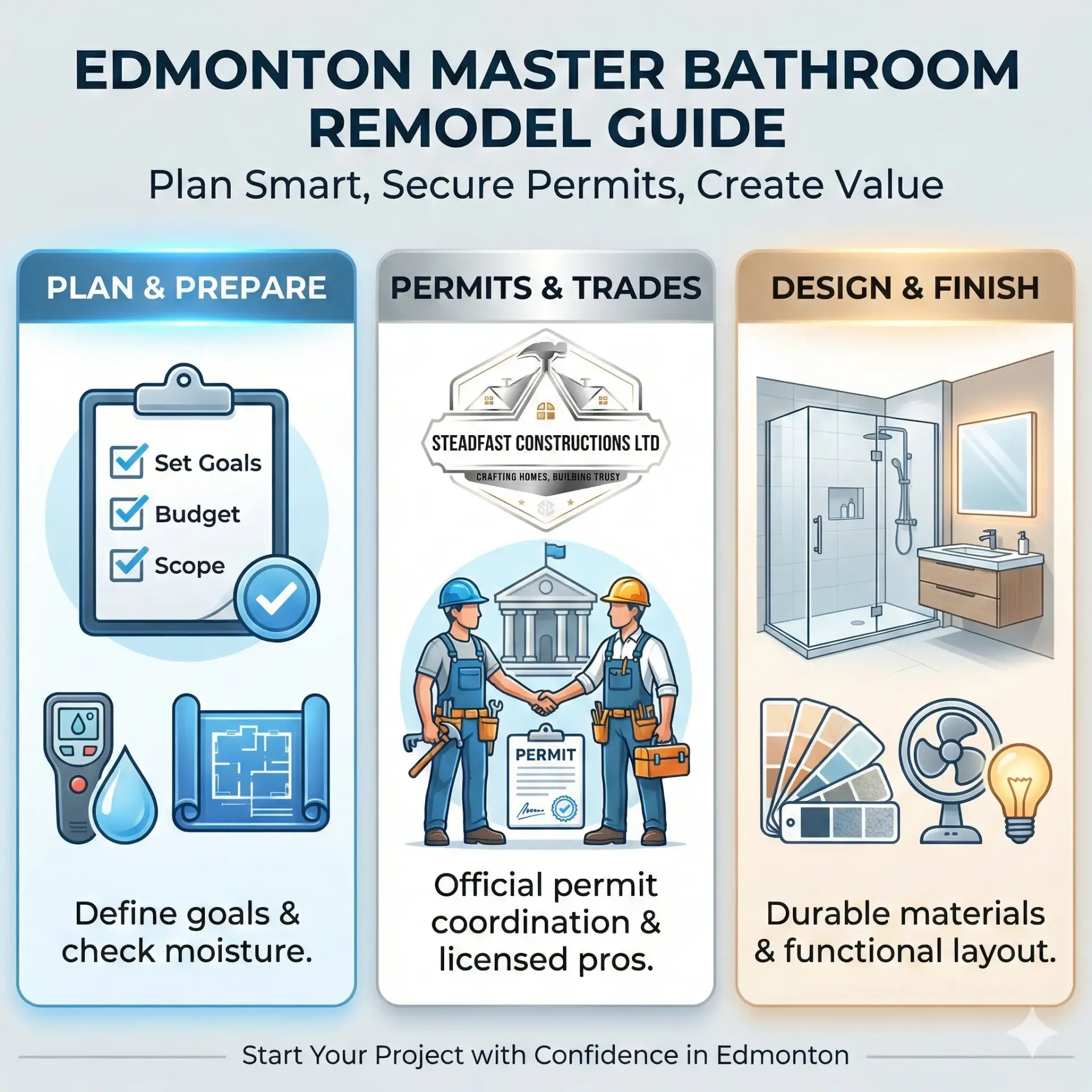
Start with clear goals for your master bathroom remodel
Before you call contractors, write down what you want the room to do.
- Is the goal more storage, a spa feel, better lighting, or an accessible layout?
- Which features are must-haves and which are nice-to-haves?
- Will this be a long-term investment or a near-term refresh?
Choosing purpose first helps every later decision. A focused plan prevents scope creep and keeps the project on track. Design choices follow function. If you want a small master bathroom to feel larger, that affects layout, colours, and storage choices later.
Check permits and local rules early
Many master bathroom changes require permits in Edmonton. Moving plumbing, altering electrical circuits, changing ventilation, or changing structural elements will typically trigger permits and inspections. Confirm with the City before work starts so you don’t run into stops or rework.
Ask this of every contractor:
- Who pulls permits?
- Who schedules inspections?
- Will the contractor provide permit-ready drawings?
A contractor who handles permits and inspections reduces risk for you. Steadfast Constructions Ltd lists permit coordination as part of their service for Edmonton bathroom projects.
Step 1: Measure, document, and diagnose
Start with a site visit and a full inspection.
- Measure the room and note ceiling height, window placements, and door swings.
- Look for existing moisture signs: discoloured drywall, peeling paint, odours, or efflorescence on masonry.
- Check ventilation. An inadequate fan or blocked ductwork leads to damp and mould later. CMHC recommends ensuring ventilation vents outdoors and choosing moisture-resistant materials.
Record everything in writing. A proper diagnosis before demolition saves time and stops surprises.
Step 2: Plan ventilation, moisture control, and heating first
Moisture and ventilation are the technical backbone of any bathroom project. If you cover a moisture source with new finishes, problems get worse. CMHC and other Canadian guides stress fixing moisture and ensuring proper ventilation before finishing.
Key actions:
- Ensure the range of ventilation is exhausted outdoors.
- Replace or upgrade fans to the right capacity for the room size.
- Protect walls and floors with appropriate water-resistant materials in wet zones.
- Consider heated floors or towel warmers for comfort, but plan electrical work with a licensed electrician and permit if needed. (Electrical work in Edmonton requires a permit.)
Solve moisture and ventilation issues first, then proceed to finishes.
Step 3: Design layout: small master bathroom ideas and flow
A good layout improves usability and resale value.
- Keep a clear circulation path. Avoid narrow squeezes.
- If space is tight, choose a walk-in shower with a frameless glass panel to open the sight lines.
- Consider a floating vanity and wall-hung toilet to create a sense of space.
- Use recessed niches for shower storage instead of bulky shelves.
If you need ideas for small master bathrooms, prioritize storage, light colours, and reflective surfaces. These moves make a small space feel larger while remaining practical.
Design inspiration and trending layout ideas can be found in curated galleries like Houzz and Better Homes & Gardens for style direction.
Step 4: Choose durable finishes and fixtures that suit daily use
Choose finishes that perform in a humid, wet environment.
- Use tile or water-resistant panels in showers and tub surrounds.
- Select flooring designed for wet areas — engineered products or moisture-tolerant planks work well.
- Pick a vanity finish that resists steam and occasional splashes.
- Choose fixtures with easy-to-clean finishes; matte and brushed metals hide wear better than shiny chrome in high-use areas.
Steadfast Constructions Ltd shows practical material choices and local projects that balance durability and style. Ask your contractor for local samples and remnant sources.
Step 5: Coordinate trades early and use licensed pros
Bathrooms touch multiple trades: plumbing, electrical, HVAC, and carpentry. Coordinate them up front.
- Use licensed plumbers and electricians for work that modifies systems. Edmonton rules require licensed contractors for many professional permits.
- Schedule rough-in inspections after plumbing and electrical work and before drywall.
- Ask contractors to show WCB and liability insurance. If they hesitate, walk away.
A project manager who schedules trades and inspections avoids rework and timeline problems. Steadfast Constructions Ltd emphasizes trade coordination and permit-ready workflows for Edmonton projects.
Step 6: Lighting and ventilation that improve mood and function
Lighting makes a big difference in a master bathroom.
- Layer lighting: general ceiling lights, task lighting at the vanity, and accent lighting near the shower or tub.
- Use LED fixtures for long life and low heat.
- Install lighting on separate circuits or dimmers for flexibility.
- Add a fan/light combo with a timer or humidity sensor so ventilation runs as needed without memory.
Good lighting planning pairs with ventilation planning. That prevents moisture buildup near fixtures and mirrors.
Step 7: Accessibility and long-term use
Design for today and tomorrow.
- Consider curbless showers and wider entries if aging-in-place or mobility is a concern.
- Place grab bars where they help without spoiling the design. Many models are discreet and stylish.
- Ensure non-slip flooring in wet zones.
Accessible features add usability for all home stages. They do not have to look medical; modern options blend with design.
Step 8: Project timeline and expectations
Timing depends on permits, trade availability, and material lead times. Recent renovation price and supply trends show that planning and procurement take time, so build extra room for ordering and inspections. Statistics Canada tracks renovation price indices and shows ongoing market shifts that can affect timelines and availability.
Ask your contractor for a clear schedule with key milestones:
- Discovery and measurement.
- Permits submitted and approved.
- Demo and rough-ins.
- Inspections and drywall.
- Finishes, fixtures, and final inspection.
Weekly updates help you stay informed.
Step 9: Protect the rest of your home during work
Renovation dust and disruption are normal, but contractors should limit their impact.
- Seal the work area with plastic and use negative-air or HEPA filtration where possible.
- Protect floors and stairs with temporary coverings.
- Ask contractors how they will handle daily cleanup and waste removal.
Good site protection reduces cleanup time and damage risk.
How to choose the right contractor for your master bathroom remodel
Vetting contractors matters. Use a short checklist:
- Do they show a local portfolio of master bathroom remodels? Ask to see similar Edmonton projects.
- Do they handle permit submissions and inspections? Get this in writing.
- Are trades licensed and insured? Ask for documentation.
- Request itemized, written scopes rather than vague quotes.
- Ask about warranties on labour and how they handle post-completion issues.
If you want a full-service local firm experienced with Edmonton codes and inspections, make Steadfast Constructions Ltd one of your interview candidates. They list permit coordination and bathroom portfolios on their site.
(Expert note) “We always test for moisture and confirm ventilation paths before selecting finishes,” says Sarah Thompson, Lead Designer at Steadfast Constructions Ltd. “That prevents costly fixes later and keeps the finished space comfortable.”
Design ideas and master bathroom remodel ideas for small master bathrooms
Small master bathrooms can feel luxurious with the right choices.
- Use a single, larger mirror to expand sight lines.
- Choose a frameless shower with clear glass.
- Install a shallow-depth vanity to keep floor space.
- Consider pocket doors to save swing space.
- Use vertical storage, recessed medicine cabinets, and floating shelves.
Good lighting and a limited colour palette make small rooms read as larger. For visuals and trend ideas, review curated galleries on Houzz and Better Homes & Gardens for layout and finish combos.
Value, trends, and why good planning matters
Bathrooms remain one of the most frequently renovated rooms, and buyers notice well-done master bathroom remodels. Industry surveys and renovation reports show that bathrooms and kitchens continue to be a top focus for homeowners planning renovations. Thoughtful choices—durable finishes, proper ventilation, and well-coordinated trades—preserve value and reduce future maintenance.
Final checklist before you start your master bathroom remodel
- Write clear goals: storage, spa, accessibility, or resale.
- Measure and inspect for moisture and ventilation issues.
- Confirm which changes need permits and who will pull them.
- Get itemized, written scopes and confirm trade licensing.
- Choose durable, water-resistant materials for wet zones.
- Plan lighting and ventilation together.
- Ask about warranty and post-completion support.
- Protect the rest of your home during construction.
When these items are clear, your master bathroom remodel is set up to be safer, more reliable, and more attractive.
Conclusion
A well-planned master bathroom remodel balances design and technical planning. Start by setting goals, diagnosing moisture and ventilation, confirming permits, coordinating licensed trades, and picking finishes that stand up to daily use. Use a local contractor who understands Edmonton permitting and inspections to avoid delays and code issues. If you want a local team that handles design, permits, and construction, contact Steadfast Constructions Ltd for a discovery visit and a permit-ready plan.
Frequently Asked Questions (FAQs)
Q1: Do I need a permit for a master bathroom remodel in Edmonton?
A1: Many changes do. Plumbing, electrical, and structural changes usually require permits. Always confirm with the City of Edmonton and your contractor, who will pull permits.
Q2: How important is ventilation for a master bathroom remodel?
A2: Very important. Proper ventilation prevents condensation, mould, and damage to finishes. Canadian guidance recommends venting directly outdoors and choosing moisture-resistant materials.
Q3: What are good master bathroom remodel ideas for small spaces?
A3: Frameless glass showers, floating vanities, shallow-depth fixtures, pocket doors, and a limited colour palette. These moves open sight lines and boost functionality.
Q4: Who should handle plumbing and electrical work in a remodel?
A4: Licensed plumbers and electricians should handle system changes. Edmonton has rules about who can perform and sign off on trade work; ask for licences and proof of insurance.
Q5: How do I check a contractor’s local experience in Edmonton?
A5: Ask for a portfolio of recent Edmonton projects, references you can call, and evidence that they handle permits and inspections. Steadfast Constructions Ltd posts local bathroom project examples to help homeowners evaluate fit.
Sources & further reading
- City of Edmonton: Plumbing permits and residential electrical permits.
- CMHC: How to green your bathroom renovation; moisture guidance.
- Natural Resources Canada: Home energy and system operation guidance.
- Statistics Canada: Residential Renovation Price Index and renovation trends.
- Houzz and Better Homes & Gardens: design and small bathroom ideas galleries.
- Steadfast Constructions Ltd: local bathroom renovation services and permit guides for Edmonton.