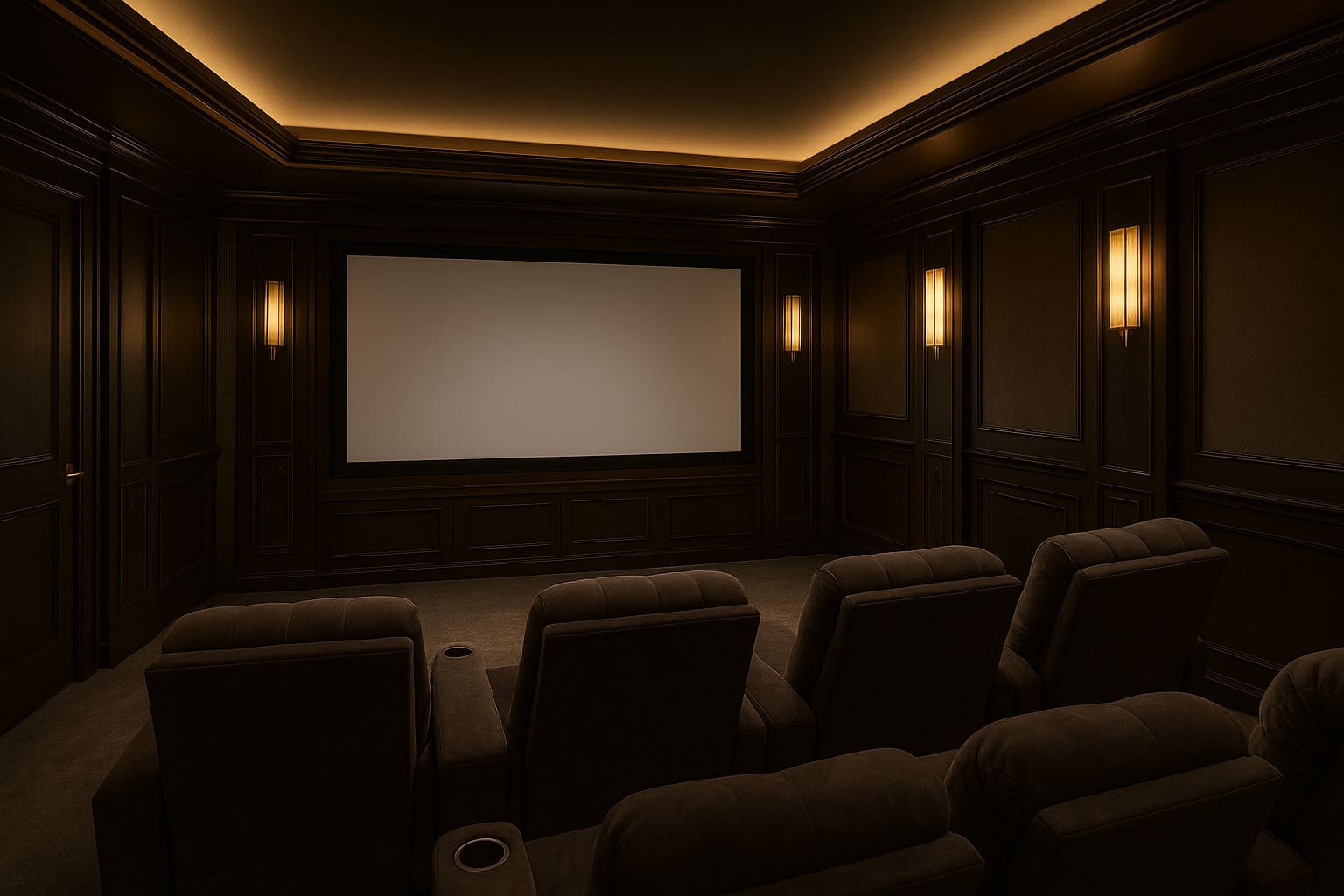
A finished basement can give you the extra living space your family needs. It can become a cozy home theater or a lively game room. This guide explains how to plan a finished basement in Edmonton.
You’ll get simple finished basement ideas, safety checks, and design tips. I’ll also explain permits, insulation, moisture control, acoustics, and who should do the work.
Why finish your basement as a home theater or game room?
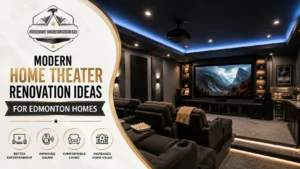
A finished basement adds usable space without moving house. It keeps loud activities away from the main living areas. Basements give good light control and sound isolation. That helps a home theater feel immersive.
A game room can be flexible. It can be a kids’ play area one year and a media room the next. Good design makes the space useful for years.
Local demand for basement work is strong. Edmonton homeowners regularly develop basements for extra living space and secondary suites. If you plan carefully, a finished basement can meet your needs and local code. steadfastconstructionsltd.com
Start with the basics: is your basement ready to be finished?
Before you pick carpet or speakers, check the structure, moisture, and head height.
Check for moisture and mould risks
Basements often have moisture issues. Fix them before you finish the space. CMHC guides warn that finishing over dampness can hide mold and make problems worse. Address the source first. publications.gc.ca
Simple checks:
- Look for water stains, efflorescence, or musty smells.
- Check sill plates and window wells.
- Fix drainage or sump pump issues first.
Confirm ceiling height and egress
Edmonton requires certain conditions for bedrooms and living spaces. If your design includes a bedroom, egress, and minimum ceiling heights matter. The City of Edmonton guide explains permit and drawing needs for basement development. edmonton.ca
Inspect insulation and vapour control
Insulating properly keeps the room comfortable and prevents condensation. Natural Resources Canada recommends correct wall and floor insulation for basements, and letting new construction dry before insulating when needed. natural-resources.canada.ca
Permits and regulations: what Edmonton homeowners must know
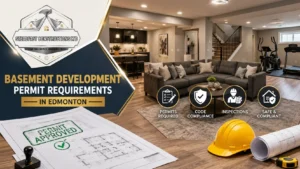
Permits are not optional for many basement projects. If you change the structure, add bedrooms, move plumbing, or alter electrical systems, you will likely need permits and staged inspections. The City of Edmonton has clear permit rules for basement development. edmonton.ca
Who does what:
- A trusted contractor usually files for permits and schedules inspections.
- If you hire a contractor, confirm in writing who will handle permits.
- Keep permit records and inspection receipts. They matter for resale.
Permits protect your family. They ensure electrical, gas, and plumbing work meets local codes.
Design basics for a finished basement home theater or game room
Think about layout, lighting, sound, and traffic flow. Keep things simple at first.
Choose the layout
Decide where the screen, seating, and game zones will go. Leave clear paths to exits. Consider sightlines and speaker placement for a theatre. For a game room, make room for tables, consoles, or equipment.
Plan lighting in layers
Basements are great for controlled lighting. Use:
- Recessed lights for general light
- Dimmable fixtures for movie mode
- Task lighting for game tables or workstations
Good lighting improves usability and mood.
Flooring choices for comfort and sound
Carpet and dense underlay reduce echo. Area rugs work if you prefer a harder floor surface. Flooring also affects comfort, especially in Edmonton winters. Use materials suited to basement humidity levels. permagard.co.uk
Acoustics and soundproofing: make your finished basement sound great
Acoustics matter more in a home theater than almost any other design element. Proper treatment will make a modest audio system sound much better.
Use the room’s natural advantages
Basements are already partially isolated by earth and structure. Use that to your advantage for lower sound leakage. Brothers Construction
Treat first-reflection points
Place acoustic panels or tough fabric on walls where sound first reflects. Thick curtains, bookcases, or upholstered furniture help too. Industry guides from CEDIA recommend treating reflection points and controlling bass for a balanced sound. cedia.org
Manage low frequencies
Bass can build in small rooms. Use bass traps or positioning strategies to tame low-frequency build-up. A simple approach is to avoid placing the main listening position right at the center of the room.
Keep neighbours and family happy
If you expect loud movie nights or gaming parties, consider additional isolation between the finished basement and upper floors. Dense drywall, resilient channels, and sealed gaps help reduce sound transmission.
Lighting, AV, and tech: plan for today and tomorrow
Tech choices matter. Make small decisions now that avoid big headaches later.
Run extra conduits and wiring
When walls are open, run extra cables for speakers, projectors, internet, and power. Label everything. A cable run costs little in the build phase and saves time later.
Plan for ventilation and HVAC
Basements need balanced ventilation. Heating, cooling, and fresh air keep the space comfortable. If you add a stove or kitchenette, you’ll need proper ventilation and permits.
Choose seating and layout that fit the room
Measure before purchasing seats. Consider modular seating for flexibility. For game rooms, use durable fabrics and stain-resistant materials.
Simple finished basement ideas and basic finished basement ideas that work
Not every finished basement needs to be complex. Here are simple ideas that bring a big impact.
- Use a projector and pull-down screen for a flexible theater setup.
- Add built-in shelving and cabinets for storage and media.
- Install dimmable recessed lights and sconces for layered lighting.
- Put a durable entertainment surface for consoles and snacks.
- Add a small wet bar or snack station if plumbing and permits allow.
These simple finished basement ideas keep the room functional and adaptable.
Common problems and how contractors solve them
Experienced contractors see the usual issues and fix them before they become costly.
Moisture and hidden mould
A contractor will test and fix moisture sources. They may install drains, improve grading, or recommend vapour control. CMHC materials stress fixing moisture before finishing. publications.gc.ca
Improper insulation
Proper insulation reduces condensation and keeps the room comfortable. Contractors follow NRCan guidance for basement insulation placement. natural-resources.canada.ca
Electronics overheating or poor ventilation
Contractors include HVAC planning or recommend simple ventilation solutions to keep AV gear cool.
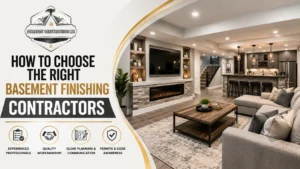
How to choose a contractor for basement finishing in Edmonton
Picking the right contractor matters. Follow this short checklist.
Verify licences, insurance, and permits
Ask if they file permits and schedule inspections. Check their insurance and WCB coverage. Steadfast Constructions Ltd handles permits and staged inspections for Edmonton projects, and they list local project examples on their site. steadfastconstructionsltd.com
Check local references and reviews
Read reviews on HomeStars and local pages. Recent photos of finished basements tell you what to expect. HomeStars is a common place Edmonton homeowners use to vet basement pros. homestars.com
Ask about warranties and follow-up
Good contractors offer workmanship warranties and will address issues after move-in. Ask for written warranty terms.
Communication and management
Choose a contractor who explains the process, provides a timeline, and names a single point of contact.
A real-world example: turning a basement into a home theater in Edmonton
Here’s a typical flow from a local contractor.
- Site visit and moisture check.
- Permit review and drawings for the City of Edmonton.
- Run wiring and rough-in HVAC.
- Insulate, install drywall, and treat acoustics.
- Finish flooring, paint, and install AV.
- Final inspection and handover.
“We start every basement project with a moisture test and permit plan,” says Jordan Mills, Senior Project Manager. “That keeps the project on track and avoids surprises.” This step sequence reflects common best practices and local permit needs. edmonton.ca
Why hire a local contractor like Steadfast Constructions Ltd
Local teams understand Edmonton’s weather, building codes, and supply networks. They also manage inspections and local subcontractors. Steadfast Constructions Ltd offers design help, permit handling, and project management for basement finishing and home theaters. Their portfolio shows local basement projects and theatre-style spaces. steadfastconstructionsltd.com
Working with a local contractor reduces communication gaps and helps keep the project compliant with city rules.
Final checklist before you start your finished basement project
Use this short checklist to get started:
- Inspect for moisture and fix it first. publications.gc.ca
- Confirm ceiling height and egress if adding bedrooms. edmonton.ca
- Plan insulation and vapour control. natural-resources.canada.ca
- Ask your contractor who files permits and schedules inspections. steadfastconstructionsltd.com
- Run extra wiring while the walls are open.
- Add acoustic treatments for a real home theater feel. cedia.org
Conclusion
A finished basement can be a great home theater or a versatile game room. Start with moisture control, correct insulation, and the right permits. Plan acoustics and wiring early. Choose a local contractor who knows Edmonton rules and handles permits.
Steadfast Constructions Ltd works with Edmonton homeowners on basement finishing, home theaters, and game rooms. They handle design, permits, trades, and inspections so you can focus on how you’ll use the space. Contact Steadfast Constructions Ltd to talk about finished basement ideas and get expert help for your project.
Frequently Asked Questions (FAQs)
Q1: What is a finished basement?
A: A finished basement is a basement space that has been completed for regular use. It usually has insulated walls, finished floors, lighting, and proper ventilation. Finished basements often serve as living rooms, home theaters, or bedrooms.
Q2: Do I need permits to finish my basement in Edmonton?
A: Yes. Many basement developments require development and building permits, plus trade permits for plumbing, electrical, or HVAC work. Confirm permit needs with the City of Edmonton and your contractor.
Q3: What are simple finished basement ideas for a home theater?
A: Use a projector and screen, add layered dimmable lights, choose carpet or rugs for sound control, and place acoustic panels at reflection points. Run extra wiring during build for speakers and network.
Q4: How do I prevent moisture and mold in a finished basement?
A: Find and fix the moisture source first. Improve drainage, check window wells, and use proper vapour control. Follow CMHC guidance for moisture management before finishing.
Q5: How do I choose a contractor for basement finishing in Edmonton?
A: Look for local experience, verified reviews, proof of insurance, and clear permit handling. Ask for references and confirm warranty and communication plans. Steadfast Constructions Ltd lists basement projects and permit services on its site.